Canada’s Federal Court Faces Record Immigration Caseload as Filings Surge
The Federal Court of Canada is under heavy pressure as immigration-related cases have escalated sharply. Chief Justice Alan Diner said the increase has fundamentally altered the Federal Court's caseload.
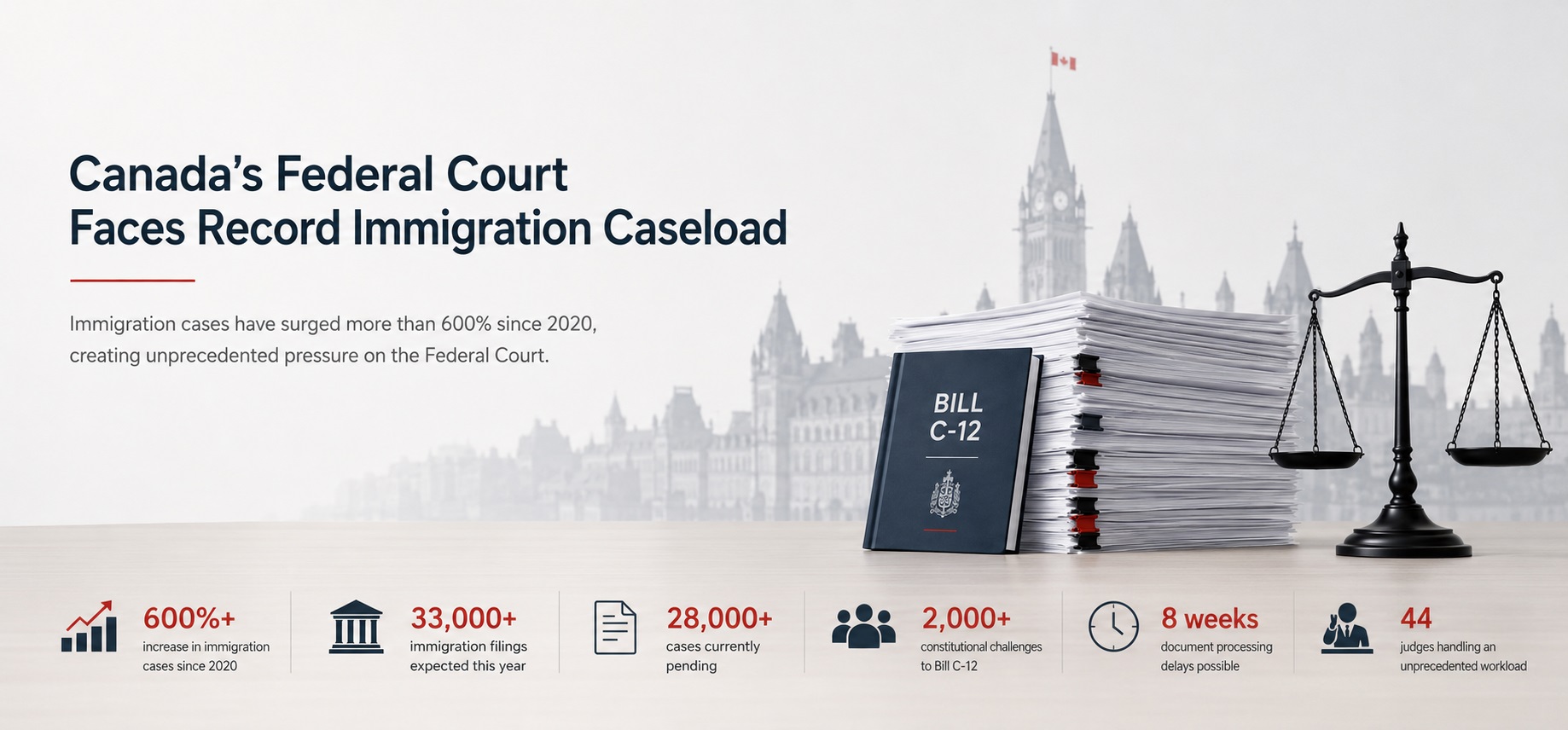
In 2014, when Diner began his service at the Court, the Federal Court handled around 5,000 to 6,000 immigration cases annually. However, starting in 2021, the number of cases surged, with nearly 9,700 addressed last year and over 33,000 expected this year, underscoring the court's capacity strain.
The Federal Court hears a wide range of immigration cases, including challenges to decisions on visas, refugee claims, inadmissibility, deportation, and other decisions made by the Canadian immigration system.
28,000 Immigration Cases Before the Court
The number of cases already pending before the Court illustrates the severity of the backlog, emphasizing the urgent need for capacity expansion and process improvements. More than 14,000 immigration cases were filed between January 1 and June 30, but approximately 28,000 cases were pending. More than 1,000 cases had also been granted leave for judicial review.
Immigration cases constituted more or less 86% of all Federal Court proceedings in the first six months of the year. According to Chief Justice Diner, judges and court staff have been working overtime, on weekends, and even during their vacations to handle the rising number of cases, demonstrating their dedication despite mounting pressures.
However, despite the increase, the number of Federal Court judges has not increased accordingly. The Court currently has 44 judges, including the Chief Justice. According to Diner, immigration litigation has risen by about 600% since 2020, while the number of judges has not changed. The Court has already requested additional judges from the federal government.
New Litigation Triggered by Bill C-12
The enactment of Canada's border security legislation, Bill C-12, has also introduced a new litigation trigger. Under Bill C-12, certain individuals who submit refugee claims in Canada within one year of entry will not have their claims determined by the Immigration and Refugee Board. Instead, such individuals may only submit a pre-removal risk assessment.
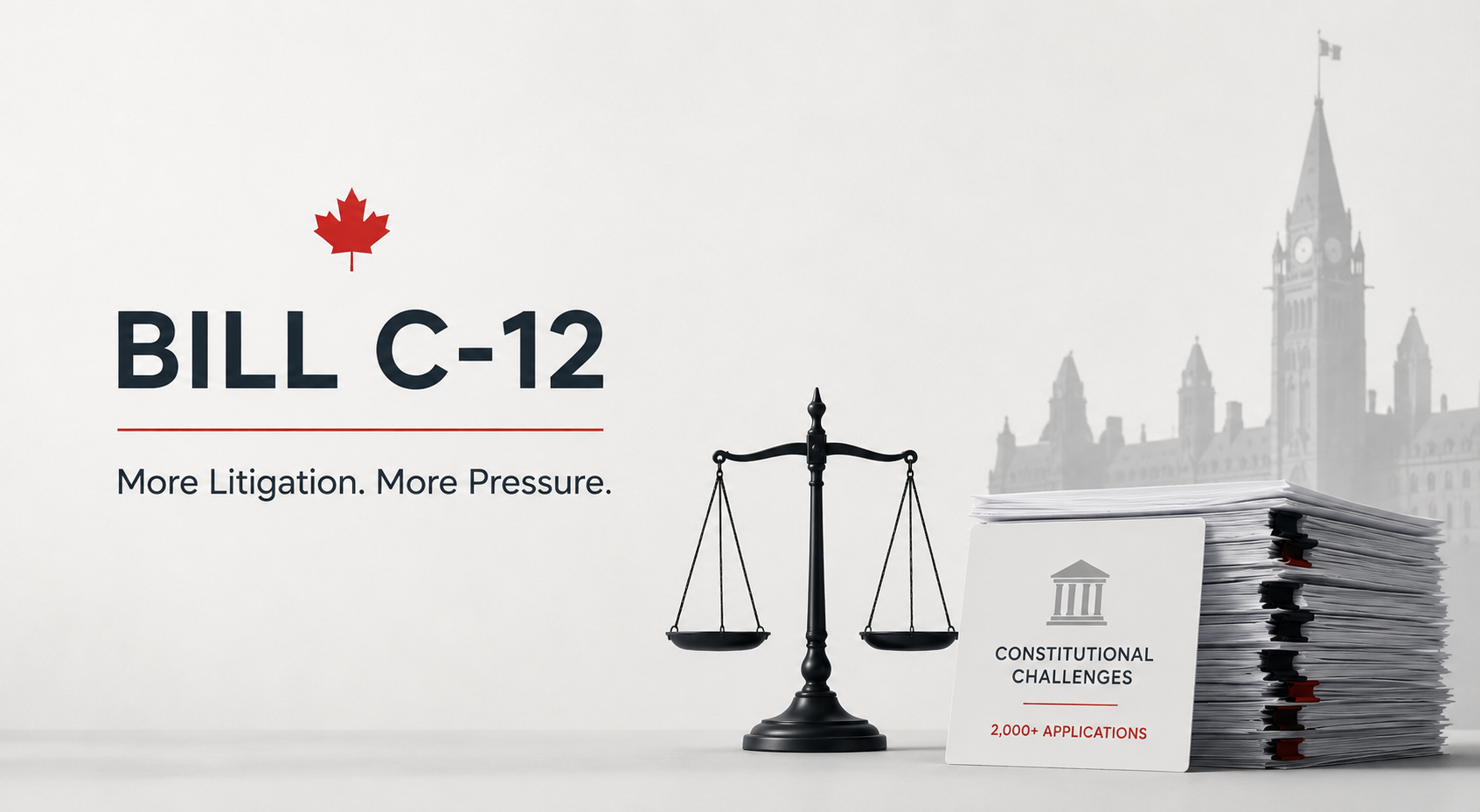
A negative risk assessment can be contested in the Federal Court of Canada.
Since the enactment of C-12, more than 2,000 challenges of legislation on constitutional grounds have been made. Rather than resolving each case individually, the Federal Court has adopted case management strategies to handle the surge, but this approach may not fully alleviate the backlog caused by the increasing volume of immigration litigation.
Applications for Stay of Removal Have Also Increased
There has been an influx of urgent applications for temporary orders restraining the removal of individuals from Canada. Typically, around 300 to 400 stay-of-removal applications are filed each year in the Federal Court. However, reports say the number has exceeded 1,100. Stay applications may require judges to make quick decisions, which adds more strain to the process.
Document Process Delays in the Court Could Go Up to Eight Weeks
This is also affecting the Federal Court Registry. According to a recent notice from the Registry, increased filing volume has delayed document processing. While the Court strives to process documents within 48 hours, some cases, especially immigration cases, could face delays that go up to eight weeks.
Chief Justice Diner has cited efficiency and modernization as key areas of focus amid the increasing volume, aiming to improve the Court's capacity and service quality. Possible steps include more digitization, automation, and using artificial intelligence for administrative and procedural tasks. Diner has said that AI is not meant to replace judges in deciding cases. Nevertheless, the Court may assess how AI can help manage the increasingly difficult caseload.
A Long-Term Capacity Problem
This pressure does not stop at immigration-related litigation. The Federal Court is also facing an increase in cases involving national security, class actions, and judicial reviews on other matters. The federal government has recognized that the Federal Court faces a growing workload. This comes from the office of Minister of Justice Sean Fraser, which has said increased caseload and backlogs are considerations when evaluating requests for more judicial capacity.
Michelle Rempel Garner, the Conservative immigration critic, said this shows broader problems in the federal government's management of immigration policy and that the constitutional litigation that arose from C-12 should have been foreseen.
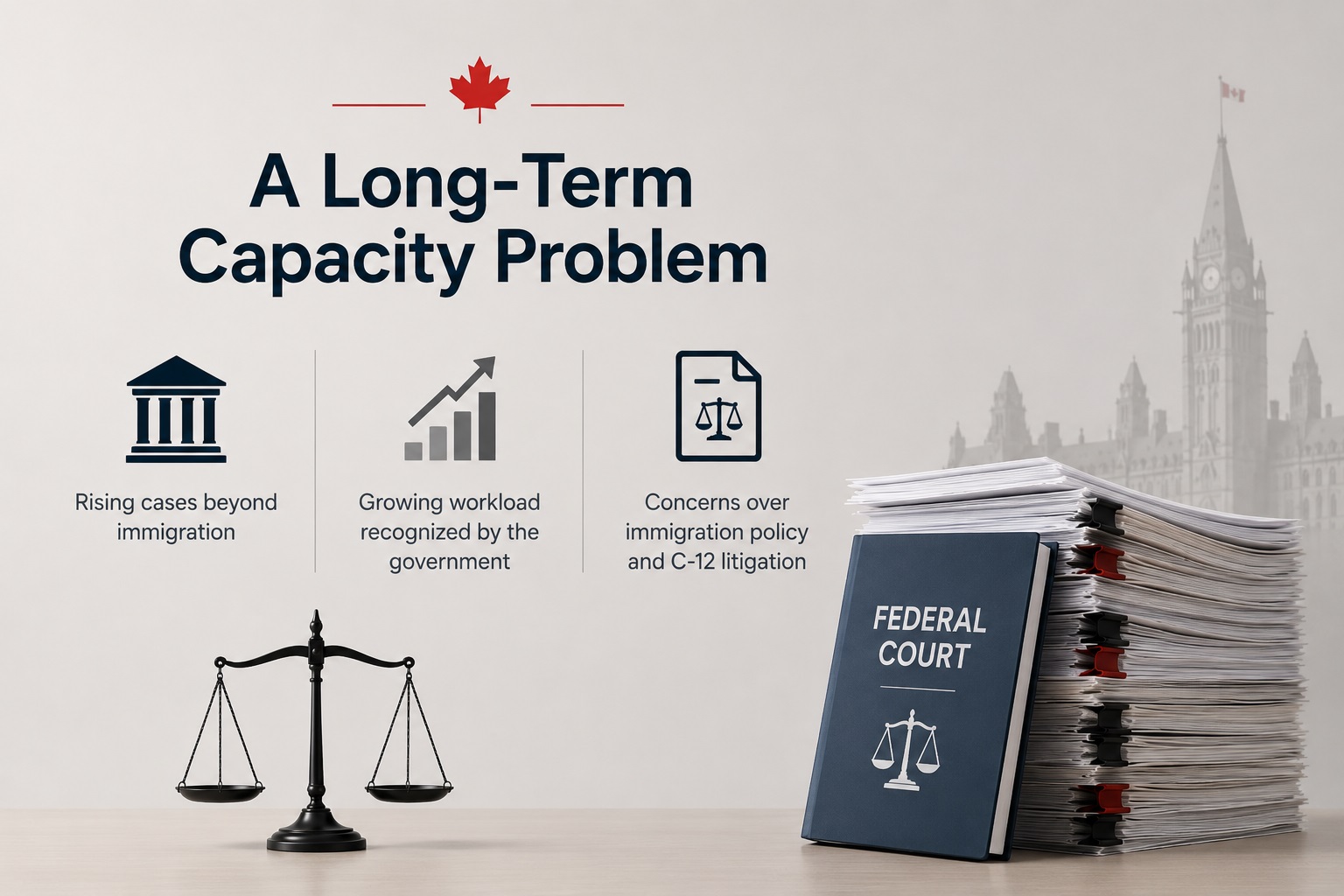
For the Federal Court, though, the problem now is one of capacity.
It is not easy to maintain over the long term a system in which judges and Court personnel depend upon evening hours, weekends and vacation time to continue their work. It becomes even more difficult because immigration cases account for a very large portion of the Federal Court's workload.