Canadian Visa Refusal Due to Ties to Home Country: What You Need to Know
Refusal of a Canadian visa because of links to the home country is one of the most common issues applicants face when applying for a Temporary Resident Visa (TRV), such as a Canadian visitor visa.
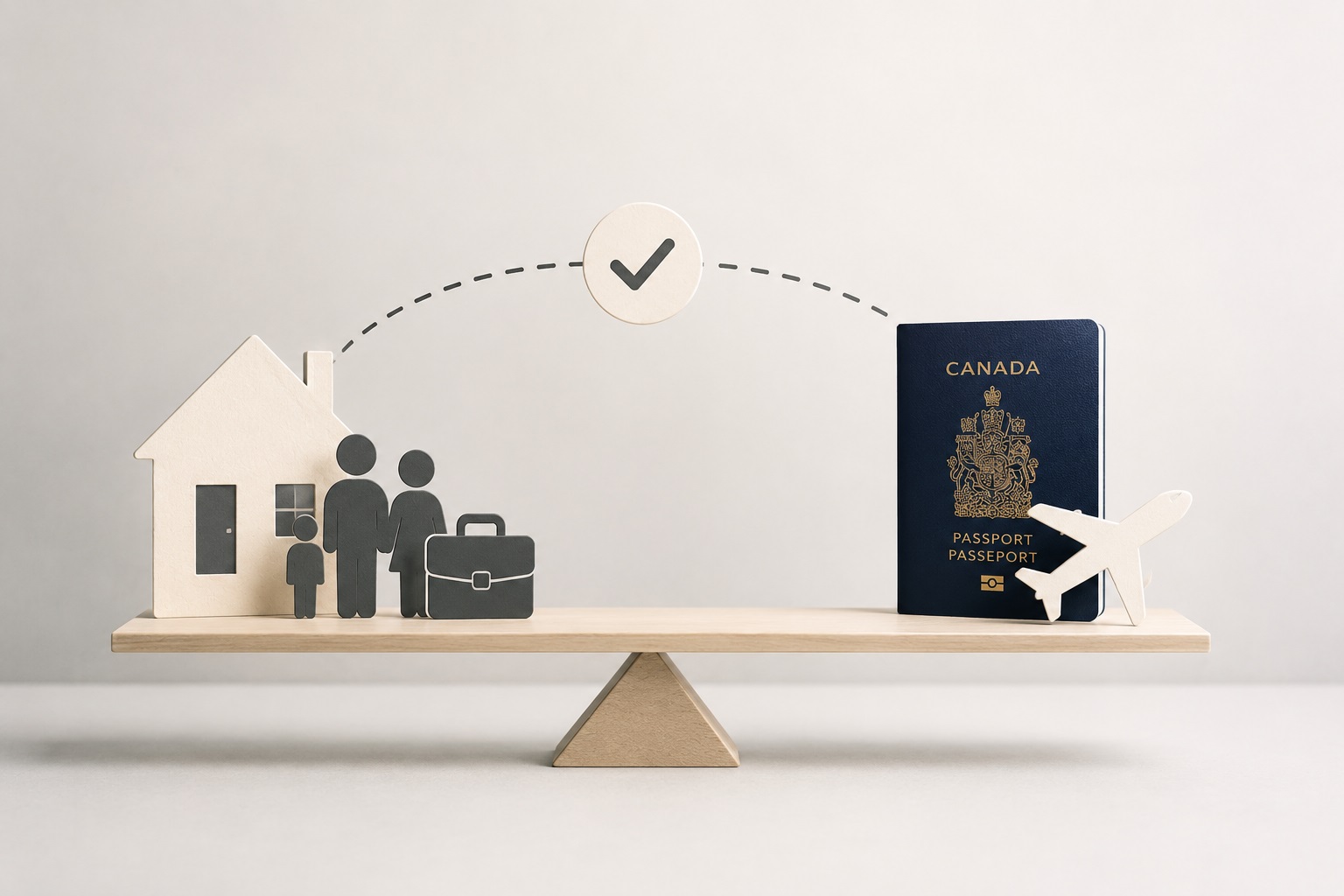
The immigration visa officer should be assured that the applicant intends to come to Canada temporarily and will leave Canada after the period for which they were granted permission to stay. If the visa officer finds that the applicant did not provide sufficient reasons to return to their home country, the application may be denied.
A denial of a visa application on the grounds of family links, work links, financial links, or other links outside Canada does not always mean the applicant lacks links. Often, the problem is that the applicant has not proven the links well enough.
What Does "Ties to Home Country" Mean for a Canadian Visa?
In the context of Canadian visas, the phrase "ties to home country" refers to the personal, professional, financial, and social factors that may induce a person to return home after a temporary visit to Canada. Emphasizing this can help applicants feel more confident in their ability to prove these ties effectively.
The visa officer reviews the entire application. Depending on the individual, the types of ties may include:
· Employment
· Business ownership or operation
· Relatives (spouse, kids, parents, etc.)
· Assets or property
· Education
· Profession
There isn't a single document that definitively proves ties; instead, combine evidence like employment letters, property deeds, and family records to demonstrate your intention to leave Canada convincingly.
Why Would Visa Officers Need to Look At Home-Country Ties For A Temporary Resident Visa?
To grant a temporary resident visa, a visa officer must determine whether the applicant will depart Canada at the end of their authorized stay.
It is a prospective analysis. The visa officer will consider the individual's circumstances and determine whether there are reasonable grounds for them to leave Canada after completing the planned journey.
For instance, someone with stable employment, immediate family in their home country, financial stability, and a defined short journey may have good reasons to return.
Yet, that alone is not enough. These reasons should be adequately documented alongside the individual's circumstances, such as travel purposes, finances, immigration history, etc. Recognizing this complexity can help professionals approach each case with patience and thoroughness.
Some Typical Cases Where Officers Deem Home-Country Ties Inadequate
1. Insufficient Evidence of Employment
Employment may be one tie; however, a letter of employment alone may not be sufficient. The application may be more credible if the evidence convincingly demonstrates the applicant's status, term of employment, salary, approved leave dates, and anticipated return-to-work date. If the employment evidence provided is not sufficient or inconsistent with the planned date of travel, then it may not be taken into account by an officer.
2. Family Ties in Canada vs. Family Ties Outside Canada
Visa officers may consider applicants' family ties both in and outside Canada. For example, if an applicant's spouse, children, or other close relatives live in Canada while few immediate relatives stay at home, this may be seen as a reason that may affect their intent to leave. However, having family in Canada does not necessarily mean a visa will be denied.
3. Lack of Demonstration of Business or Professional Ties
Submitting a certificate of business registration for entrepreneurs and self-employed individuals may be enough to show the individual has some business commitment.
Further documentation may be needed to confirm the existence of a business and the individual's need to return because of certain responsibilities. These could include documentation about the operation, contracts, financial records, employment, ongoing projects, etc.
4. Proof of Property without Any Clarification
Proof of property may be enough to show strong ties, but it may not prove ties or that the individual will return. There should be some consideration of the importance of the property in connection with the other information provided by the individual in the application.
5. Limited Demonstration of Family Ties
In some cases, the individual will provide documentation about family members living in their home country without explaining how this creates responsibilities that would compel the individual to return.
If you cite family in your home country as a tie, clearly explain how your responsibilities or commitments-like caring for dependents or managing property-necessitate your return, making your ties more convincing.
How to Show Strong Ties to Home Country for Canada
The type of evidence needed depends on the applicant's personal circumstances. There is no one-size-fits-all documentation list for all Canada visitor visa applications.
This may include:
· Work authorization and leave approval
· Proof of pay and employment history
· Company ownership and operating documents
· Marriage and birth certificates
· Proof of having dependents
· Proof of property or lease
· Financials such as bank account statements
· Proof of ongoing studies
· Professional commitments
· Contracts or work requiring the return of the applicant
Additional proof is not always beneficial. The goal is to submit relevant proof of the applicant's intention to return backed up by an accurate explanation.

Is It Possible to Get a Canada Visitor Visa Without Having Property?
Yes. You don't need to own real estate to get a Canada visitor visa. Some applicants believe that owning a house or land is essential to prove their strong ties. That is just one of many ways to do it. Clarifying this can help applicants feel more at ease and confident in their options.
Even without the ownership of property, an applicant can prove their ties in any other way – for example, through a steady job, business, family obligations, studies, finances, or professional commitments.
Does the Presence of Relatives in Canada Cause Visa Refusal?
The presence of family members in Canada is a relevant consideration in determining whether a person will return to their home country at the end of their temporary status in Canada. Still, it does not necessarily mean a person will be refused a visit visa for this reason.
The Canadian immigration law provides for the concept of dual intent: a person may have a long-term intention to immigrate to Canada and, at the same time, intends to comply with the conditions of temporary status in Canada.
The critical factor is whether the officer finds it convincing that the applicant will return to their home country when their temporary status in Canada expires.
What If the Officer Disregarded Evidence of Strong Ties?
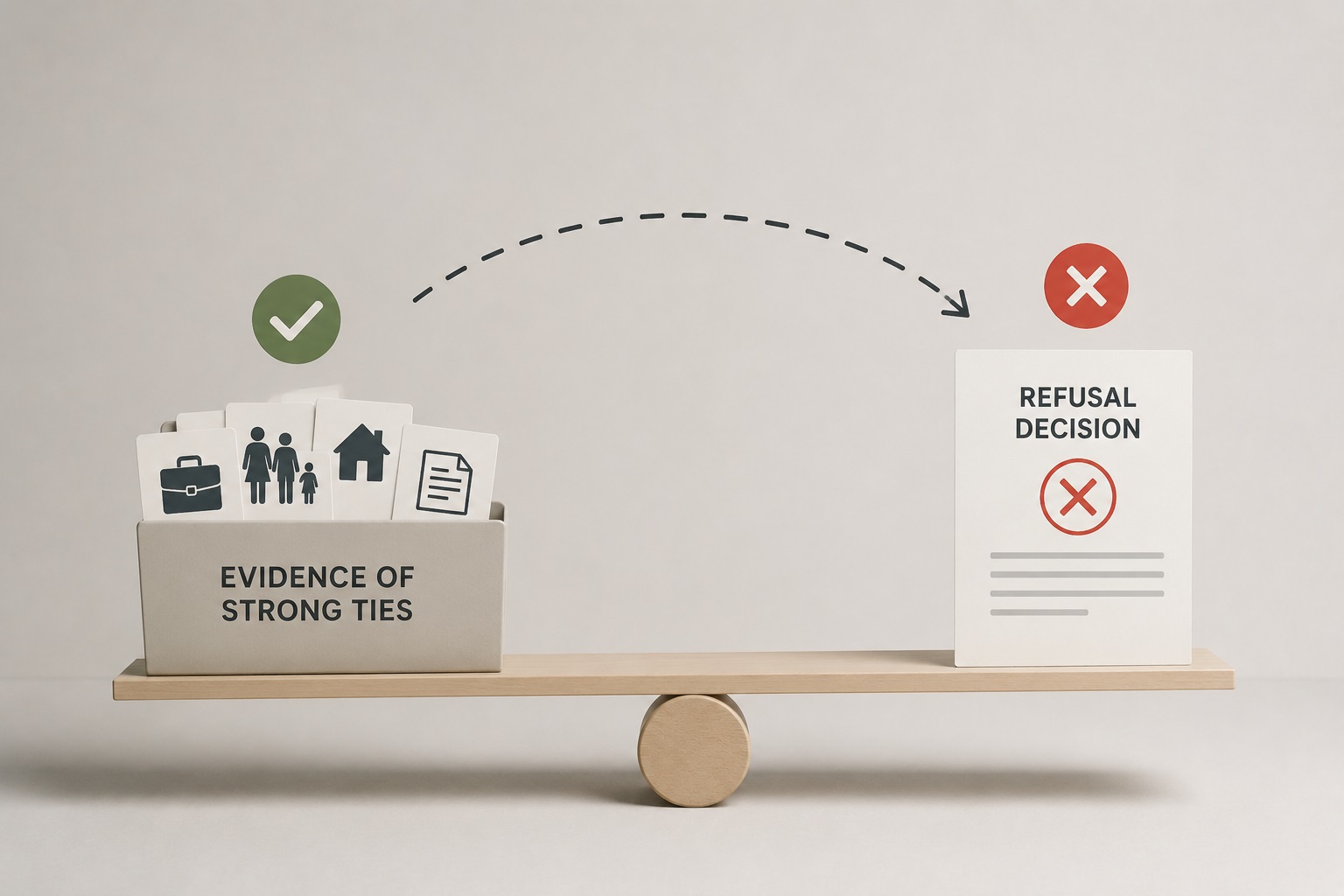
Sometimes the applicant presents substantial evidence of employment, family, business, property, or other ties in their home country, but the officer states in the refusal that the applicant's ties outside Canada did not convince them.
It is necessary to differentiate between two situations here.
First, the application may not have provided sufficient evidence of strong ties. This may justify a stronger TRV reapplication after refusal.
Secondly, the applicant may have presented sufficient evidence to the officer that is not mentioned in the decision.
Is It Advisable to Reapply After Being Denied a Visa Due to Ties to Your Country of Citizenship?
Submitting the same application with little variation in supporting facts may lead to a second denial. The following are issues that need consideration before preparing another application:
· What were the ties that the officer questioned?
· How much evidence was there in the previous application?
· Was certain evidence not submitted? Were they explained well?
· Do circumstances change for the applicant?
· Will more evidence address the officer's concerns?
· Does the denial seem to correspond to the evidence presented?
Answering these questions will determine whether you need to prepare a new application.
Is There a Way to Challenge a Visa Refusal for Having Ties Through Federal Court Proceedings?
Possibly.
You can challenge a visa refusal issued by Canadian authorities through judicial review in the Federal Court of Canada when the case presents reasonable grounds for that approach. Unlike a visa application, judicial review involves a review of the legality and reasonableness of the immigration decision. If the Court accepts the application for judicial review, it will overturn the refusal and review the application anew. Federal Court proceedings are subject to strict time limits; therefore, you must seek legal assistance immediately after your application is rejected.
How to Appeal for Canada Visitor Visa Refusal
Every visa refusal in Canada is different and must be treated individually. If your initial application lacked key information and explanation, as well as proof of ties, then you might want to try again. However, there are cases when you might want to seek a judicial review of your decision at the Federal Court if substantial evidence has been provided. Still, the officer's assessment of that evidence may be unjustifiable. Thus, you should first find out the actual reason for your refusal.
Frequently Asked Questions about Ties to Home Country
How would you define strong ties for a Canadian visitor visa?
Strong ties can include employment, business activities, family relationships, education, property, financial or professional obligations, and other factors showing a connection between an applicant and their country of residence. The importance of each factor depends on the particular case.
Will employment be sufficient evidence of my ties to my home country?
Not necessarily. Employment can be one factor, but officers consider the whole application. They may consider the nature and stability of the employment, approval of the leave of absence, your financial status, family circumstances, travel plans, and other factors.
Can my visa be rejected if I have property?
Yes. Having property alone is not enough to get a visa. Other criteria will determine the chances of leaving Canada afterward.
What do I need to do after a Canadian visa refusal because of weak home country ties?
We should analyze the refusal reasons and the documents provided with the initial application. In some cases, the proper step is to resubmit the application or consider filing a judicial review with the Federal Court.
Can Visa Appeal reconsider the refusal because of weak home country ties?
Visa Appeal will analyze the refusal reasons, the officer's explanations, and all documents provided initially to determine whether you should resubmit the application or file a case at the Federal Court.