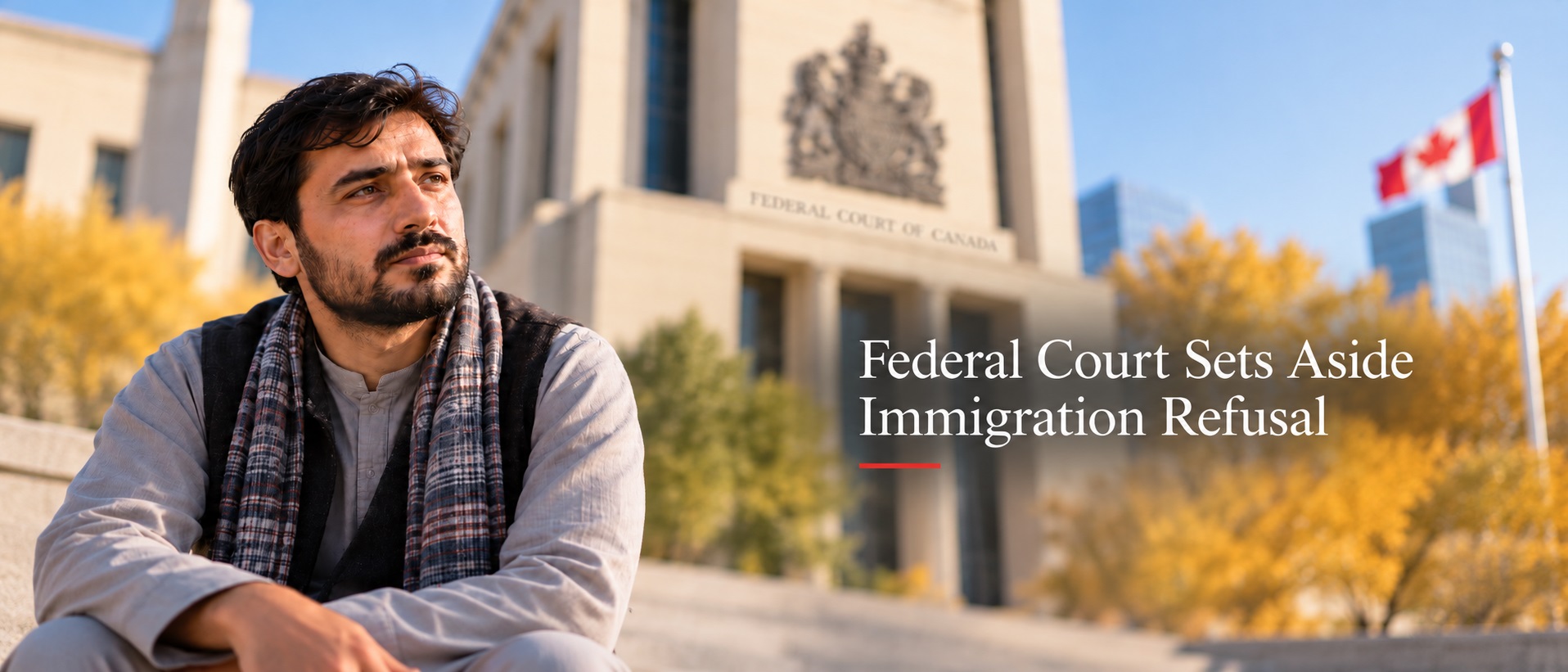
Canada Visa Denial Due to Lack of Financial Resources: Reasons, Evidence, and Legal Remedies
A Canada visa denial due to lack of financial resources may happen when an immigration official is not convinced that the applicant possesses sufficient liquid and credible finances to pay for expenses during their stay in Canada. Financial problems may be related to visa applications for visitors and students and also may relate to certain permanent residency programs.
The presence of financial resources on the account is not always the solution to the problem. IRCC may analyze how much money is available, the source of the money, the applicant's financial background, the liquidity of the money, and the consistency of the financial documents in view of the nature and length of intended stay. Understanding the reasons for such a denial is the key factor after a Canadian immigration application rejection.
“Insufficient Financial Support” in Canada Visa Rejection – What Does It Mean?
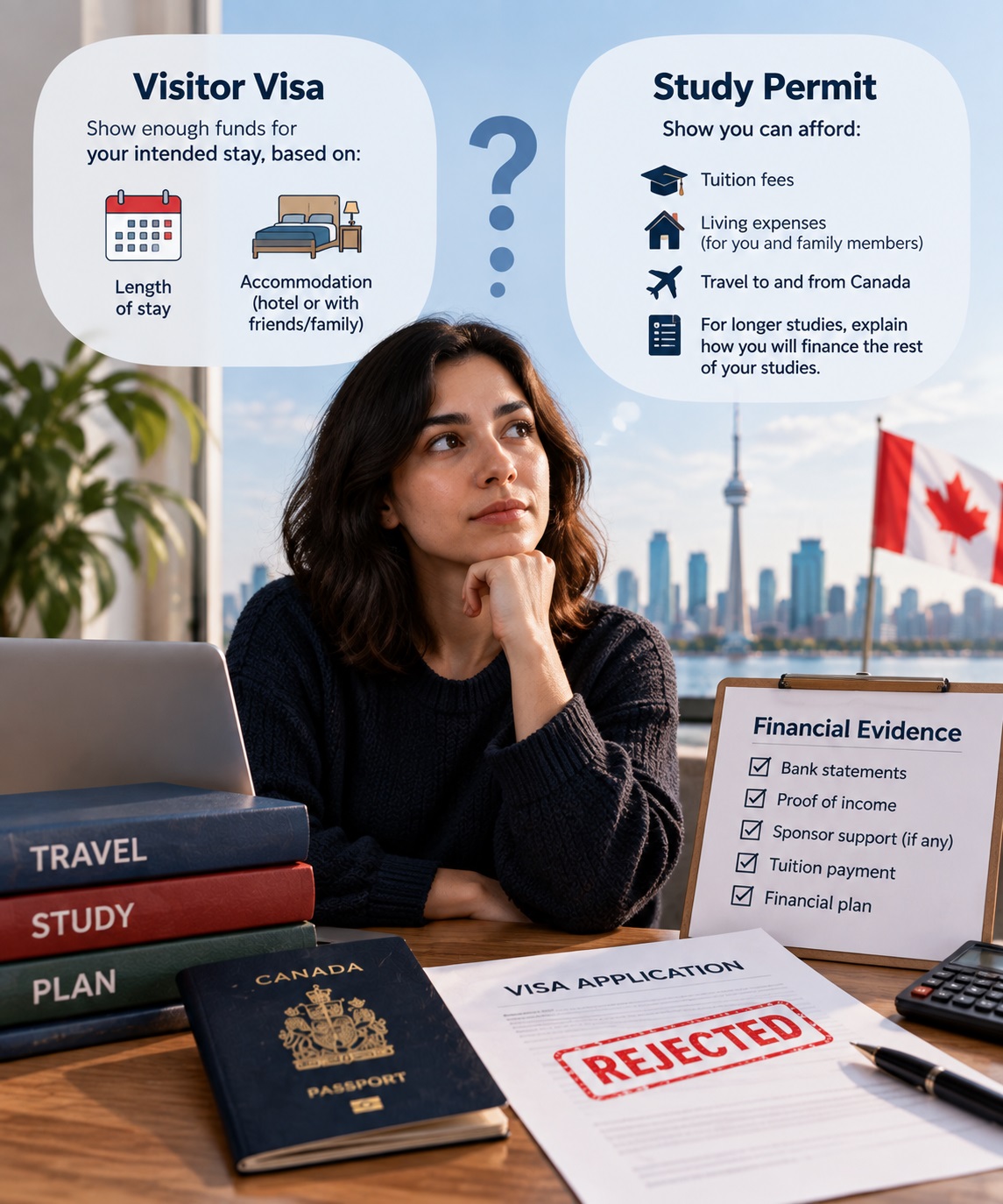
With regard to a Canada visitor visa, it is necessary to prove that the applicant has enough funds for their intended stay. According to IRCC, the amount of funds is determined depending on factors such as the intended period of stay and accommodation in a hotel or staying with friends/family.
The financial requirements for a study permit are a little bit stricter. In general, it is necessary to prove that the applicant can afford the following expenses:
· tuition fees;
· expenses for living of the applicant and accompanying family members; and
· traveling to and from Canada.
For longer periods of study, IRCC expects the applicant to provide information on how they are going to finance the rest of their studies.Thus, a rejection based on insufficient financial support does not imply the absence of funds. The problem lies in providing adequate proof of such funds.
Reasons for Visa Rejection Regarding Financial Support
There are several situations related to finances that can cause an immigration officer to doubt whether the applicant is able to support themselves in Canada.
1. Insufficient Money Available
The first situation where a problem may occur is the lack of a sufficient amount of money available in relation to the cost of the intended visit or study period. For visitor visas, there is no set amount that can be used by all applicants. For the study permit, there are some specific financial requirements set by IRCC that are updated regularly.
2. Large or Unexplained Deposits
A large bank account balance may not hold much weight if the bulk of the amount arrived just before the filing of the application. It is natural for an officer to inquire about the source of the money and whether the same is actually available to the applicant. Such proof of the sources of money may take the form of salaries, sales proofs, investments, money earned through business, transfers between accounts of the applicant, or proof of the sources of money.
The need for proof of financial transactions is one area that has been emphasized, especially in relation to the processing of study permits. This is evident in a 2026 federal report on IRCC processing.
3 – Lack of Evidence of the Source of Money
The fact that an applicant can show their final bank balance may not provide the full financial picture. As is provided in the current IRCC guidance regarding study permits, bank statements can be submitted as supporting evidence, along with statements for the last six months and evidence of the source of the income shown in these statements.
It depends on the specific situation of each individual, but some additional documents may include employment records, pay stubs, tax forms, business documents, investments, pension information, or rental information.
4. Issues Related to Sponsor Financial Support
Applicants don’t always fund their travel and studies solely on their own. A parent, a spouse, family member, or someone else may contribute financially to cover the cost.
Nevertheless, merely mentioning that the person will pay the costs won’t necessarily suffice. The study permit guide issued by IRCC mentions several types of evidence that could be presented to prove the sponsor and the source of financial support. The information could include the sponsor’s employment and occupation, their relationship to the applicant, number of dependants, and amount of financial support.
It would be reasonable for the general evidence to show who is contributing the funds, what the reasons are for providing such support, the extent of it, and whether the person has financial means to do that.
5. Inconsistency Between the Finances of the Applicant and the Suggested Travel
Finances are an aspect that somebody should assess against the overall application.
In particular, an expensive or lengthy travel plan will certainly draw attention if the income and finances of the applicant are not adequate to cover the anticipated cost. Also, the application for a study permit should take into account not only the cost of tuition but also living and travel expenses. The above-mentioned aspects should be consistent.
Which Financial Documents Will Be Useful for a Canada Visa Application?
Depending on the immigration program and personal situation of the applicant, some documents that can be used are:
· recent bank statement;
· letters and slips from employer;
· tax returns;
· documents related to savings or investments;
· documentary evidence for major deposits made;
· proof of tuition fees;
· scholarship letters and documents;
· loan documentation for education;
· documents showing income from any business;
· income documents from rentals or pensions;
· financial supporting documents from the sponsor;
· relationship proof between the applicant and financial sponsor; and
· documentary evidence of the sponsor's financial means.
The requirements by IRCC will be different depending on the immigration program, and visa office-specific requirements may also apply.

Insufficient Financial Resources and Visitor Visas Rejection in Canada
In the case of TRV, financial situation can be a part of the general assessment of the legitimacy of the proposed temporary visit.
According to IRCC, those applying for a visitor visa should be able to support themselves financially during their stay and should convince the officer of their intention to leave Canada upon completion of their visit. Additionally, an applicant could prove other ties, such as a job, property, or family outside Canada.
According to section 179(b) of the IRPR, an officer shall be satisfied that the foreign national who is applying for a temporary resident visa will leave Canada at the end of the period of his or her stay. Therefore, financial circumstances may be evaluated together with other grounds of temporary residence applications.
Lack of Funding and Study Permit Refusals by Canada
Financial evidence plays an important role in study permits. According to IRCC, one of the factors for refusal in a study permit application is a lack of financial means to support oneself during studies in Canada.
The requirement set out by IRCC for funding as part of an application for a study permit on and after September 1, 2026, for an applicant studying outside of Quebec is CAD $23,448 for first-year living costs, excluding the cost of tuition and travel. The amount varies according to the number of accompanying dependents and also varies in Quebec. However, meeting this financial threshold does not mean that all the financial issues are settled.
What Are the Things You Should Do Following Canada Visa Rejection Due to Lack of Sufficient Financial Support?
The course of action you take should depend upon the grounds of rejection and the evidence which has been presented at the time of filing the application. There are chances that you should resubmit your application with stronger and more powerful documentation. The situation could arise when the reason behind the rejection of the application was any problem related to evidential support, and it could include such things as:
However, the mere submission of the same evidence would not solve the problem. It is essential for you to find out the grounds of rejection and what should be the response in that particular matter.

Can a Canada Visa Application Refusal be Challenged Before the Federal Court of Canada?
Based on the facts of each case, the refusal of a Canada visa application may be reviewed through an application for leave and judicial review before the Federal Court of Canada.
In contrast to applying for a new visa with a stronger application, judicial review involves a review of the lawfulness of the administrative decision-making process. On a case-by-case basis, there may be issues regarding whether the officer had made a reasonable assessment of the facts and whether some procedural fairness was upheld. Dissatisfaction with the conclusions reached by the officer does not necessarily indicate that the refusal was unreasonable under the law.
Upon a successful outcome, the typical remedy sought would not involve issuance of the visa. Instead, it may consist of quashing the decision and re-review of the application according to the decision of the Federal Court. As Federal Court proceedings have strict statutory timelines, applicants who contemplate initiating a judicial review must seek legal guidance as soon as possible upon a refusal.
Reapplication or Judicial Review?
It depends on each case. It is advisable to apply for a re-application in a situation where there are significant financial documents lacking, or there is scope for the applicant to provide better evidence.
In cases where the relevant evidence has already been provided by the applicant but the applicant feels that there is a legal ground for review, then a judicial review would be appropriate. Sometimes, an applicant may require legal advice concerning both these options.
What Could Be Done to Decrease the Chance of a Refusal on Financial Grounds?
An effective application will be one which shows an understandable and well-documented financial picture.
The applicants should check whether the evidence provides straightforward answers to such practical questions as how much money the person has, where this money comes from, who owns this money and can control it, whether the money can be used to cover expenses in Canada, and so on. Consistent financial documentation may facilitate the understanding of the applicant's situation by the officer.

Canada Visa Rejected due to Lack of Financial Support?
A rejection on the ground of lack of financial support doesn't always preclude other courses of action. It all depends on the type of application, refusal letter, reasons stated by the officer, and evidence of financial means provided with the first application. A legal analysis will allow identifying whether the issue at hand can be solved via submission of a new, stronger application or there are legitimate grounds for judicial review of the visa denial before the Federal Court of Canada.
Visa Appeal offers professional assistance to analyze your Canada immigration rejection and identify possible avenues for appealing an unfavorable decision.
📞 +1 249 500 5807
Your appeal. Our experience. Your success.