De Facto Family Members in Canada: Federal Court Clarifies H&C Applications
In Hamed v. Canada (Citizenship and Immigration), 2026 FC 1012, the Federal Court has reiterated the requirement for a holistic approach by the immigration officer in assessing H&C claims made by persons who have a de facto family relationship with the applicant.
This case is significant as it offers direction to applicants who wish to apply for permanent residence through H&C claims where there is a close family relationship, but which does not meet Canada's definition of "family member."
Case Background
The applicant, Iman Yassin Hamed, is a citizen of Eritrea who was residing in Saudi Arabia. Following the disappearance of both her parents in the year 2013, the applicant’s only relative and caregiver became her first cousin, Sumeya Alidin Mohammed, who became responsible for taking care of Iman’s upbringing, schooling, and financial and emotional well-being. Despite being legal cousins, they were effectively mother and daughter for many years.
Eventually, Sumeya had to flee from Saudi Arabia and acquire refugee status in Canada, becoming a permanent resident there. In this regard, the applicant could not be deemed a member of the family according to the definition provided in the Immigration and Refugee Protection Regulations. Consequently, she applied for permanent residence as a de facto family member in accordance with section 25(1) of IRPA.
An immigration officer refused both requests.
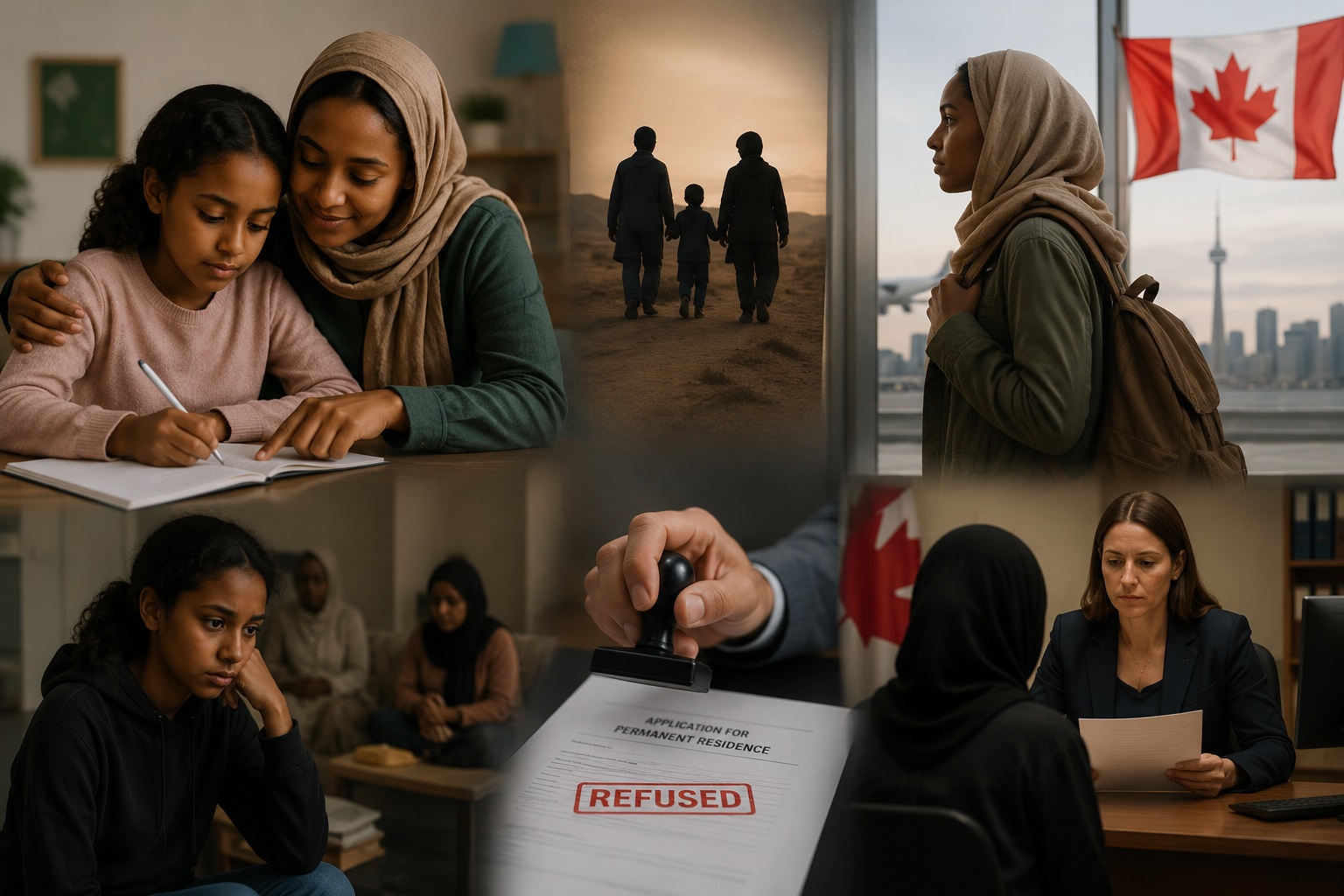
Why did the Immigration Officer reject the Application?
The reasons cited by the officer include that:
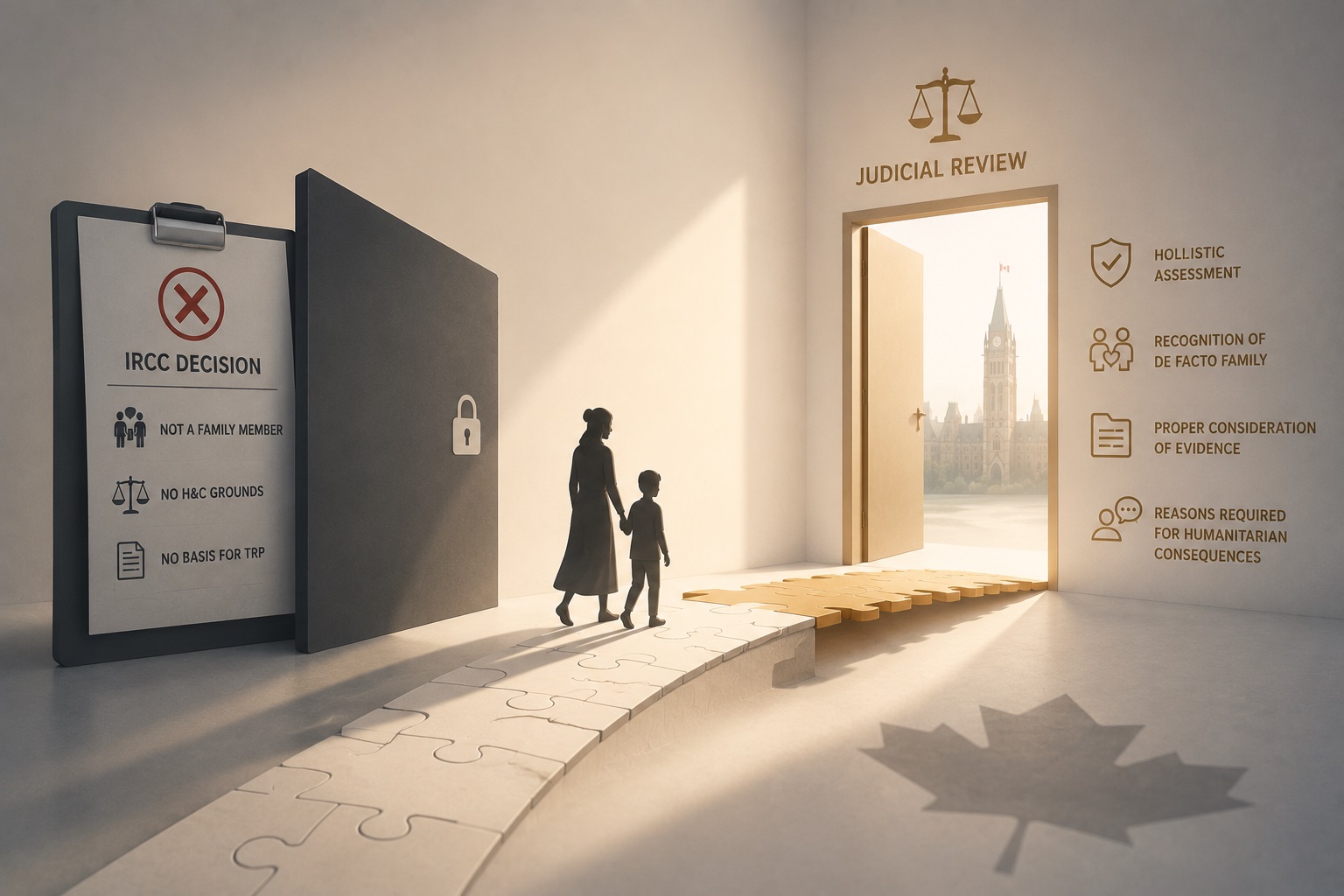
The applicant was not a de facto member of Sumeya's family.
Humanitarian and Compassionate grounds for obtaining an exception under the Immigration and Refugee Protection Act were lacking.
There were no grounds for issuing a Temporary Resident Permit.
The applicants applied for judicial review before the Federal Court, claiming the officer did not evaluate the evidence correctly and misinterpreted their relationship.
The Federal Court's Ruling
Justice Norris granted judicial review and ruled that the case had to be reviewed by another immigration official.
It was ruled that there were several fundamental mistakes in the officer's reasoning, making the decision unreasonable.
Four Fundamental Mistakes Made by the Immigration Officer According to the Federal Court
1. Failure to Conduct a Holistic Assessment of the Relationship
The Court stressed that an H&C application requires a holistic evaluation of the relationship as a whole. The officer neglected the time when Sumeya practically became a mother to the applicant after the disappearance of his parents and concentrated mostly on the period following Sumeya's move to Canada.
2. Unjustified Reliance on the Absence of Legal Guardianship
The officer criticized the applicants for the fact that Sumeya had never obtained legal guardianship. On the contrary, it was established that legal guardianship or adoption were unavailable options in Saudi Arabia, given the applicant's lack of legal standing in this country. In addition, the Court stated that the officer disregarded the fact that it was impossible to seek help from the Eritrean authorities because of persecution.
3. Unfounded Assumption about Family Visits
The officer considered the lack of visits to the applicant by Sumeya after moving to Canada as an argument against dependency. It was regarded as a speculation since the officer did not take into account whether Sumeya had any possibility of traveling to Saudi Arabia based on refugee status or some other circumstances.
4. Conjecture About Alternate Family Support
The officer found that there was sufficient support, since the applicant was only staying with distant relatives for the time being and added that other relatives could help her.
This rationale was rejected by the Federal Court as there was no proof that these relatives would be willing or able to offer continuous support. The officer did not take into account the sworn evidence that the arrangement was temporary, and speculation cannot take the place of evidence.

Important Legal Points
This case serves as an affirmation of the following key points of Canadian immigration law:
The case affirms that immigration officers should make decisions based on a comprehensive review of the relationship, encouraging confidence in the process among legal professionals and applicants.
Explain that de facto families are recognized through dependency, not solely by legal family definitions, reinforcing legal understanding.
The case emphasizes that decision-makers must handle evidence properly, reinforcing trust in the fairness of immigration decisions for legal practitioners and applicants.
Where the consequence of the refusal is humanistic, the officer must give reasons.
Reasons for This Case Being Significant
Many people who act in the roles of parents, siblings, or offspring are not included in the definition of "family member" in the Immigration and Refugee Protection Act. In this case, it was once again demonstrated that the Humanitarian and Compassionate application is a critical pathway to recognition of actual family relations of a dependent kind.
In addition, the court's ruling reminds us that one cannot disregard years of caring simply because there is no guardian and there are possible sources of care.
The court's decision underscores the importance of fairness in H&C applications, helping legal professionals and applicants feel assured of just treatment.
Conclusion
Judicial review was granted by the Federal Court because the decision made by the immigration officer was unreasonable, and the immigration officer had failed to correctly evaluate evidence concerning de facto family relationship.