Misrepresentation in IRCC: Knowing the Problem of Immigration Fraud, Section 40 Inadmissibility, and Possible Solutions
Misrepresentation is perhaps the most severe problem associated with filing an immigration application to Canada. In case of a misrepresentation determination by IRCC, the applicant will face application rejection, inadmissibility for 5 years, and other severe effects on immigration intentions.
Getting acquainted with the concept of misrepresentation according to IRCC, possible reasons for such problems, and ways to address concerns of immigration officers after their notification is very important.
What Does Misrepresentation Mean in Canadian Immigration Laws?
As per section 40 of the Immigration and Refugee Protection Act (IRPA), a person may be considered inadmissible to Canada if there is direct or indirect misrepresentation or omission of any material information that may influence the assessment of an immigration application.
Misrepresentation does not have to involve intentional false statements. In certain cases, an applicant may be penalized even if the error is unintentional, as follows:
- giving partial information;
- not disclosing pertinent background information;
- submitting wrong information;
- answering an immigration question wrongly; or
- using information prepared by someone else without proper verification.
Applicants are still liable for the accuracy of all the information that they submit as part of their application process, even with the help of an authorized representative/consultant/family member/interpreter.
Some Common Examples of Misrepresentation During the Immigration Application Process
Misrepresentation may take various forms, such as:
Inadequate Disclosure of Prior Immigration History
It is crucial for applicants to give truthful information about their prior immigration history. This could be:
- any previous visa denial by Canada or any other country;
- prior applications for immigration;
- removal or violations of immigration laws; and
- cancellations or any problems with status.
Failure to disclose information because it seems outdated, irrelevant, or insignificant may cause problems when that information should have been disclosed.

Presenting False or Falsified Documents
The IRCC may look into documents presented as evidence for an application. Potential problems may be associated with such documents as:
- letters of employment or job offers;
- banking information and financial documentation;
- educational documentation;
- language test results;
- identity documents;
- relationship documents; and/or
- police and medical documentation.
Inconsistencies in Information Among Applications
Conflicts among the forms, letters of support, interviews, and prior immigration applications could cause the IRCC to suspect the credibility of the information.The applicant is advised to carefully compare their prior applications and provide clarifications for changes in circumstances, if any.
Family Data Entry Error
Not listing all necessary family members, like a spouse or a child, is likely to pose a problem in future sponsorship issues.
Can an Honest Mistake Result in Misrepresentation?
In certain instances, the applicants claim that the information was left out or inaccurate because of an honest mistake. In Canada, the immigration law requires that a lot of responsibility be placed on the applicants in ensuring that all information submitted is complete and accurate.These will vary from one case to another depending on issues such as the type of information provided, why the information was left out or inaccurate, whether it influenced the decision-making process, and whether the applicant tried to fix it.
Where the applicant becomes aware of the mistake before it is detected by IRCC, fixing the information might be crucial.
What Will Happen If IRCC Believes That There Is Misrepresentation?
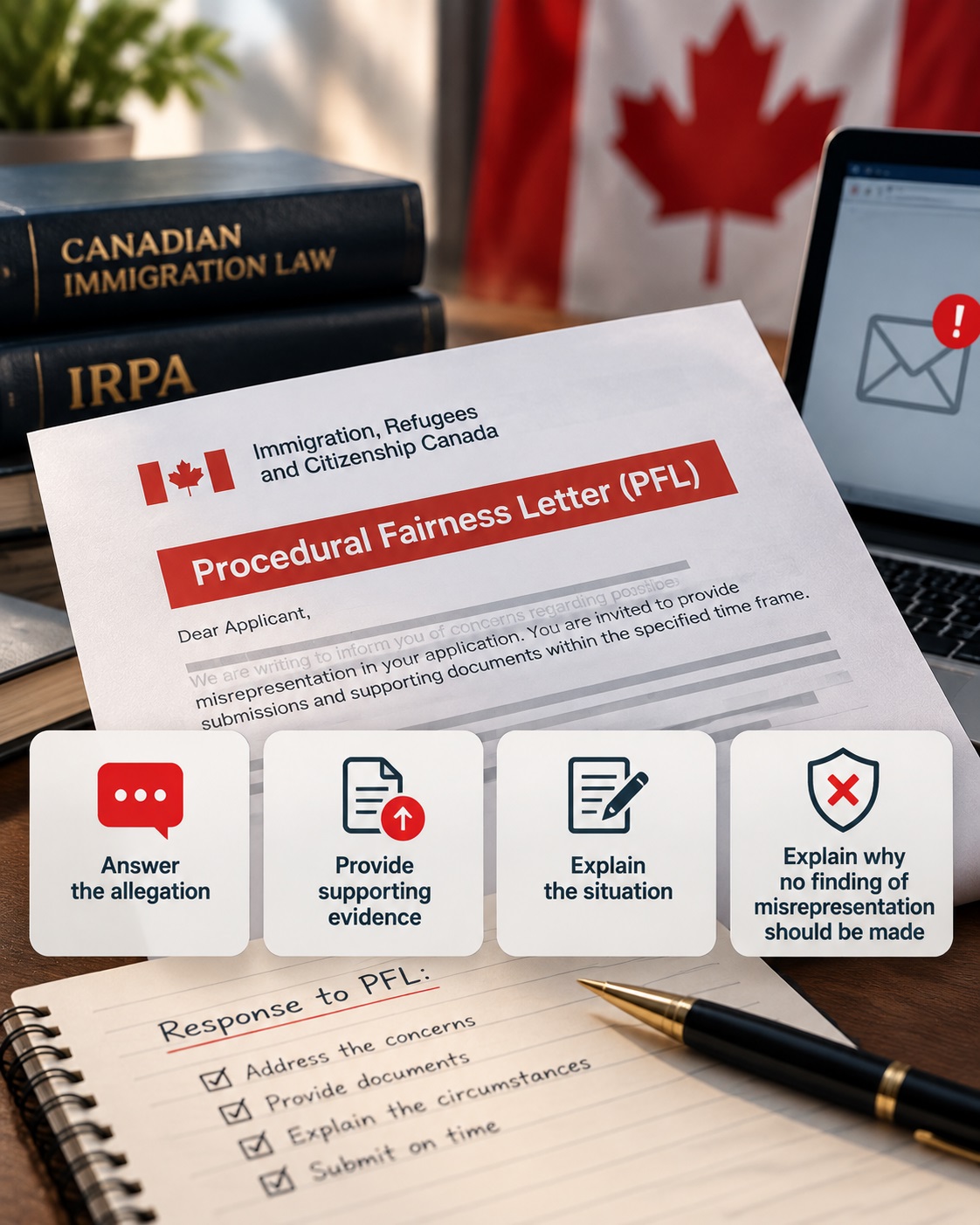
Before coming up with any findings regarding misrepresentation, IRCC can send a Procedural Fairness Letter (PFL), informing the person about what will happen.
An answer to a PFL is an important step because the applicant may have to do the following:
- Answer the allegation.
- Provide proof for it.
- Explain the situation.
- Explain why no findings should be made about the misrepresentation.
Failure to answer adequately may result in refusal.
IRPA Misrepresentation Consequences
A finding that an individual has misrepresented their information will have the following consequences:
- denial of the application currently being considered;
- a prohibition on applying for Canadian immigration programs for five years in most cases;
- difficulty in acquiring either temporary or permanent residence in the future;
- possible removal of immigration status in some cases; and
- the impact on future applications.
In some cases, the misrepresentation may even impact the family member who was part of the immigration application.
Can a Misrepresentation Decision Be Challenged?
A matter relating to misrepresentation can, in certain circumstances, be challenged through an Application for Leave and Judicial Review to the Federal Court of Canada.The Federal Court does not rehear the immigration case. Rather, it determines whether IRCC’s decision was made in accordance with the law and whether the decision-making process was reasonable and procedurally sound.
Issues that may be raised include the following:
- Whether IRCC took proper consideration of the evidence;
- Whether the applicant was given an opportunity to answer;
- Whether there was any misunderstanding on the part of the officer with respect to relevant facts; and
- Whether the explanation given was sufficient.
Strategies for Avoiding Misrepresentation
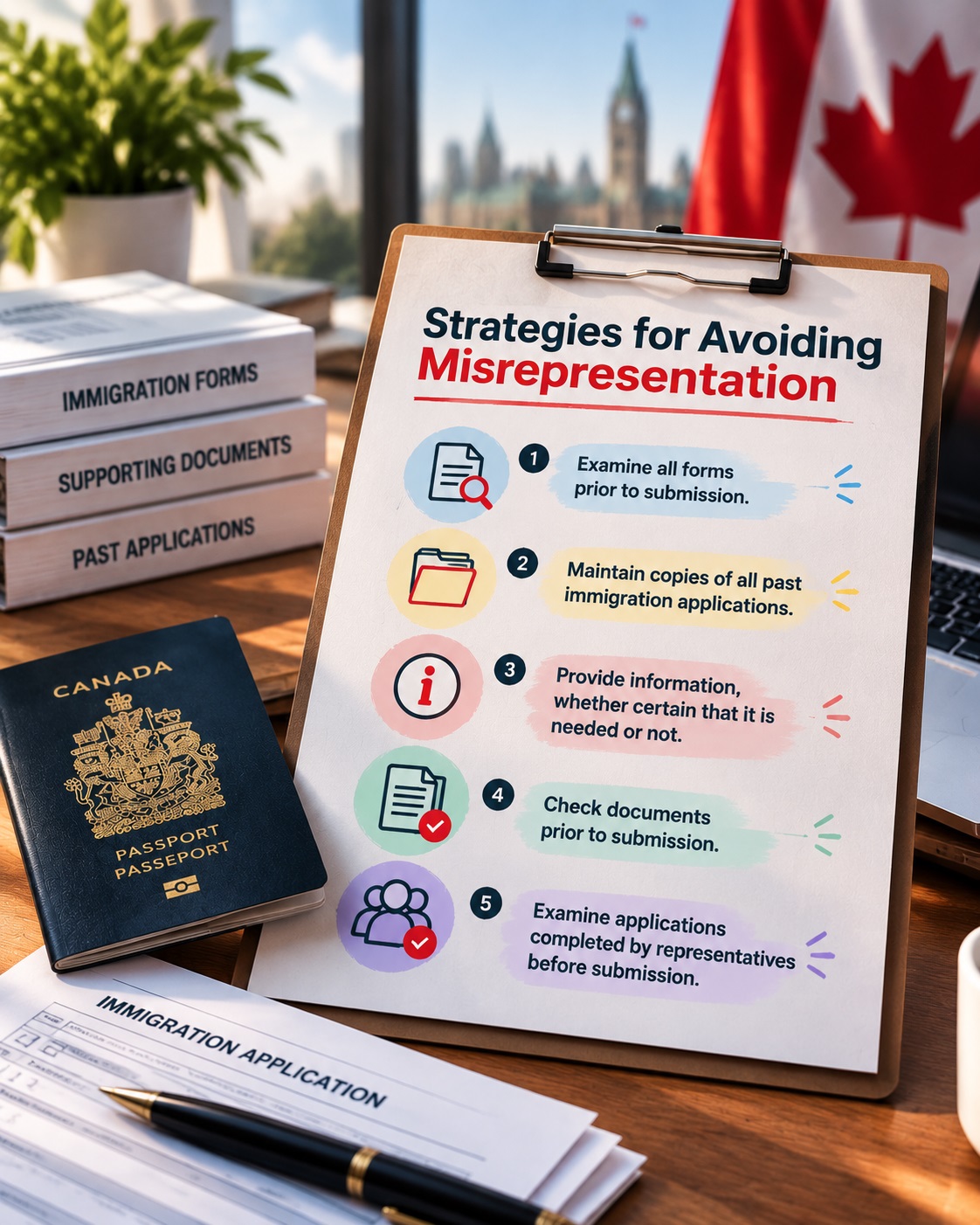
Individuals can reduce their chances of misrepresentation through the following means:
1. Examining all forms prior to submission.
2. Maintaining copies of all past immigration applications.
3. Providing information, whether certain that it is needed or not.
4. Checking documents prior to submission.
5. Examining applications completed by representatives before submission.
Conclusion
Questions of misrepresentation need careful consideration since the effects may limit an individual’s chances of coming into Canada for a number of years to come. If IRCC has concerns regarding misinformation, missing information, or documents that raise suspicion, knowing what it is and how to deal with it appropriately may be crucial.Individuals who face allegations of misrepresentation or refusal need to seek legal advice to see what they can do.